our mission
The mission of the Linn County Democrats is to help elect candidates for local, state and federal government positions that believe in common-sense, American values and the protection of those values for all of our citizens.
We believe that respect for these values, in actions not just words, will make Iowa a better place to live and our country more united. Among these values, Linn County Democrats support are:
-
-
- Respect for the U.S. Constitution and its amendments
- Equality in the eyes of the law
- Protecting the civil liberties for all of our citizens
- Protecting our environment and natural resources
- Creating jobs and raising incomes for all Iowa families, not just the wealthy
- Protecting the rights of American workers
- Quality, affordable education to ensure Iowa’s children and displaced workers can compete for the jobs of tomorrow
-
To learn more about the Linn County Democrats, please email us at info@linncountydemocrats.org
LCDCC EXECUTIVE BOARD
Linn County Democrats represent the political party of inclusion, because like America itself, Iowa is a diverse state of people, nationalities, and faith. Our elected leaders come from various backgrounds and professions, each of them motivated by a strong sense of community and desire to get things done on behalf of the people of Iowa.
Below are the Democratic leaders currently serving the people of Linn County to make our state a better place to live:
Bret Nilles
Chair
Email: chair@linncountydemocrats.org
Valerie Smith
1st Vice Chair
Email: 1stvicechair@linncountydemocrats.org
Peggy Stover
2nd Vice Chair
Email: 2ndvicechair@linncountydemocrats.org
Cheyrl Hines
Treasurer
Email: treasurer@linncountydemocrats.org
Charles Crawley
Secretary
Email: secretary@linncountydemocrats.org
Ashley Burns and Sarah Van Deest
Finance Co-Chairs
Email: financechair@linncountydemocrats.org
Membership
Members in the Linn County Democratic Central committee are elected during the presidential and off year caucuses. Each precinct in the county is represented by two members and any number of alternate and associate members
Members of the Central Committee are to assist with the following responsibilities:
- Represent the Democrats of this precinct on the county central committee
- Attend all meetings, functions, and events of the county Democratic Party
- Maintain regular contact with Democrats in this precinct
- Help the county party conduct precinct Caucuses and county conventions
- Assist the county party with fundraising
- Register new Democratic voters
- Assist the county party with recruiting volunteers
- Assist the Iowa Democratic Party in the implementation of field efforts
- Learn the geography and demographics of this precinct
- Share information with all Democratic candidates equally
- Represent this precinct at special nominating conventions
- Perform other tasks that will assist in the election of all Democratic candidates.
Click HERE for a list of the current LCDCC Members
Organization, Constitution and By-Laws
Interested in learning more about the operations side of the Linn Couty Democrats? The following documents are available to download:
These documents are updated from time-to-time so check back with us every few months to ensure you have the accurate copies.
If you are interested in joining our party in a leadership or committee position, these documents would be a beneficial resource to reference.
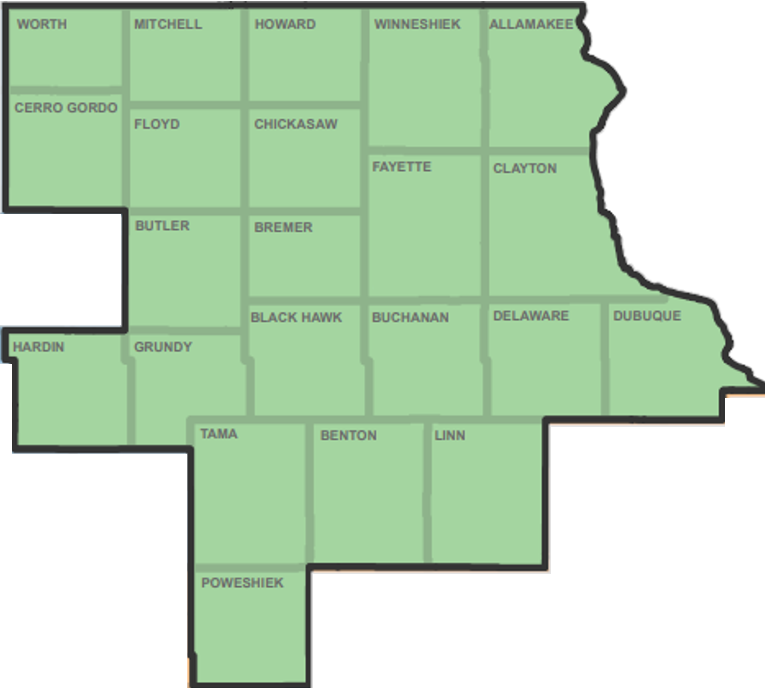
Iowa Second Congressional District
Linn County is part of Iowa’s Second Congressional District
For more information visit